
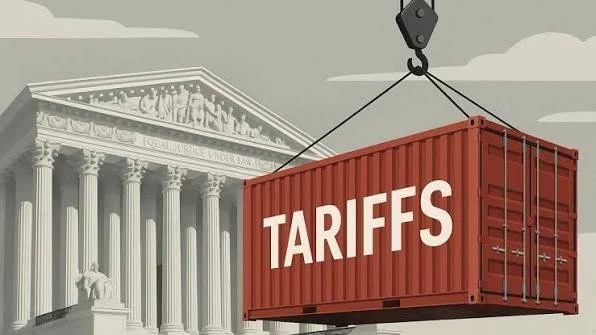
The U.S. trade landscape has undergone one of the most dramatic shifts in decades following a landmark Supreme Court decision and the rapid implementation of new tariffs by the White House. These developments are creating both significant refund opportunities and new tariff exposure for importers, exporters, and companies operating in bonded warehouses and Foreign Trade Zones.
Supreme Court Strikes Down Emergency Tariffs
On February 20, 2026, the U.S. Supreme Court issued a major ruling in Learning Resources, Inc. v. Trump, holding that the International Emergency Economic Powers Act (IEEPA) does not authorize the President to impose tariffs. In a 6–3 decision, the Court ruled that tariff authority lies with Congress under the Constitution and cannot be created through emergency economic powers. As a result, tariffs imposed under IEEPA in 2025 were deemed unlawful. The ruling affects more than $130 billion in duties collected over the past year and immediately stopped the government from collecting those tariffs going forward. Importantly, the decision does not affect tariffs imposed under other trade laws, including Section 232 (steel and aluminum) or Section 301 (China tariffs), which remain in force.
Massive Tariff Refund Process Underway
Following the Supreme Court decision, the U.S. Court of International Trade issued a sweeping order on March 4 directing the government to refund the unlawful tariffs. The order potentially affects more than 330,000 importers across the United States. Estimates suggest the government may need to refund between $166 billion and $175 billion in duties, including interest. However, the process is still evolving. U.S. Customs and Border Protection has indicated that issuing refunds at this scale requires new automated systems and may take several months to implement. A computerized refund process is expected to be operational later in 2026. Many companies have already filed lawsuits to protect their refund rights, and additional claims continue to be filed as importers quantify their exposure. For businesses, the key takeaway is that companies that paid IEEPA tariffs should review their entries and work with customs brokers and counsel to preserve potential refund claims.
White House Responds With New Global Tariffs
In response to the Court’s decision, the administration moved quickly to impose new tariffs under a different legal authority. On February 20, the President issued a proclamation establishing a 10 percent global tariff under Section 122 of the Trade Act of 1974, effective February 24, 2026. Section 122 allows the President to impose a temporary import surcharge of up to 15 percent for up to 150 days when the United States faces serious balance-of-payments issues. The new tariff currently applies at 10 percent, although the administration has indicated it may raise the rate to the statutory maximum of 15 percent if necessary. The tariff is scheduled to remain in effect through July 24, 2026, unless extended by Congress.
Important Exclusions
Despite being broad in scope, the Section 122 tariff includes important exclusions covering many strategic goods. These exemptions include categories such as energy products, pharmaceuticals, certain electronics, vehicles, aerospace components, and goods qualifying for duty-free treatment under USMCA and CAFTA-DR.In addition, products already subject to tariffs under other statutes, such as Section 232, will generally continue to face those tariffs rather than the new Section 122 duty.
Legal Challenges Already Emerging
The new tariff regime is already facing legal scrutiny. In early March, 24 U.S. states filed a lawsuit challenging the Section 122 tariffs, arguing that the statutory conditions required to impose the tariffs have not been met and that the administration exceeded its authority. This means the trade environment may continue to evolve rapidly as courts review the legality of the new tariff program.
What This Means for Importers
Businesses are now facing a unique situation in which past tariffs may be refunded while new tariffs are simultaneously being imposed. Companies must manage both issues at the same time. Importers should focus on several immediate priorities. First, they should evaluate whether their historical entries were subject to IEEPA tariffs and determine potential refund opportunities. Second, companies must assess whether their products fall within exclusions from the new Section 122 tariffs. Finally, businesses should confirm that tariff treatment applied in the Automated Commercial Environment is correct for new entries.
Strategic Opportunities for Supply Chains
The temporary nature of the new tariff program creates opportunities for companies that can strategically manage the timing of imports. Bonded warehouses and Foreign Trade Zones can play an important role in this environment. These programs allow companies to defer duties while trade policy evolves, which may reduce costs if tariffs are modified or removed before goods enter U.S. commerce.
Venture Logistics Perspective
The transition from IEEPA tariffs to a new Section 122 tariff regime represents one of the most significant and rapid changes in U.S. trade policy in recent years. Companies must now navigate both backward-looking refund opportunities and forward-looking tariff exposure at the same time. At Venture Logistics, we are closely monitoring these developments and working with our customers to analyze tariff exposure, identify refund opportunities, and evaluate bonded and FTZ strategies that can help mitigate risk. Trade policy is evolving quickly, and companies that remain proactive and flexible will be best positioned to manage costs and maintain supply chain stability in the months ahead.